Dried flowers are easy to live with, but a little thought about placement makes them look deliberate. A bunch dropped into a jar can look accidental, while the same stems given a little room and the right container look chosen. None of it is difficult, and most of it comes down to a few habits that are worth knowing before you begin.
Start with the light. Strong direct sun fades dried colors over time, so a spot with gentle light keeps them looking richer for longer. Pigments in petals were already fragile when the flower was alive, and drying does not make them tougher. A shelf across from a window often works better than the sill itself, since it still gets daylight without the harshest rays.
Think about how the room changes through the day, too. A corner that is shaded in the morning may take full sun in the afternoon. Walk around at different hours and notice where the light lands. Place your arrangement where the brightness is soft and steady, and you will see the colors hold far longer than they would beside a sunny pane of glass.
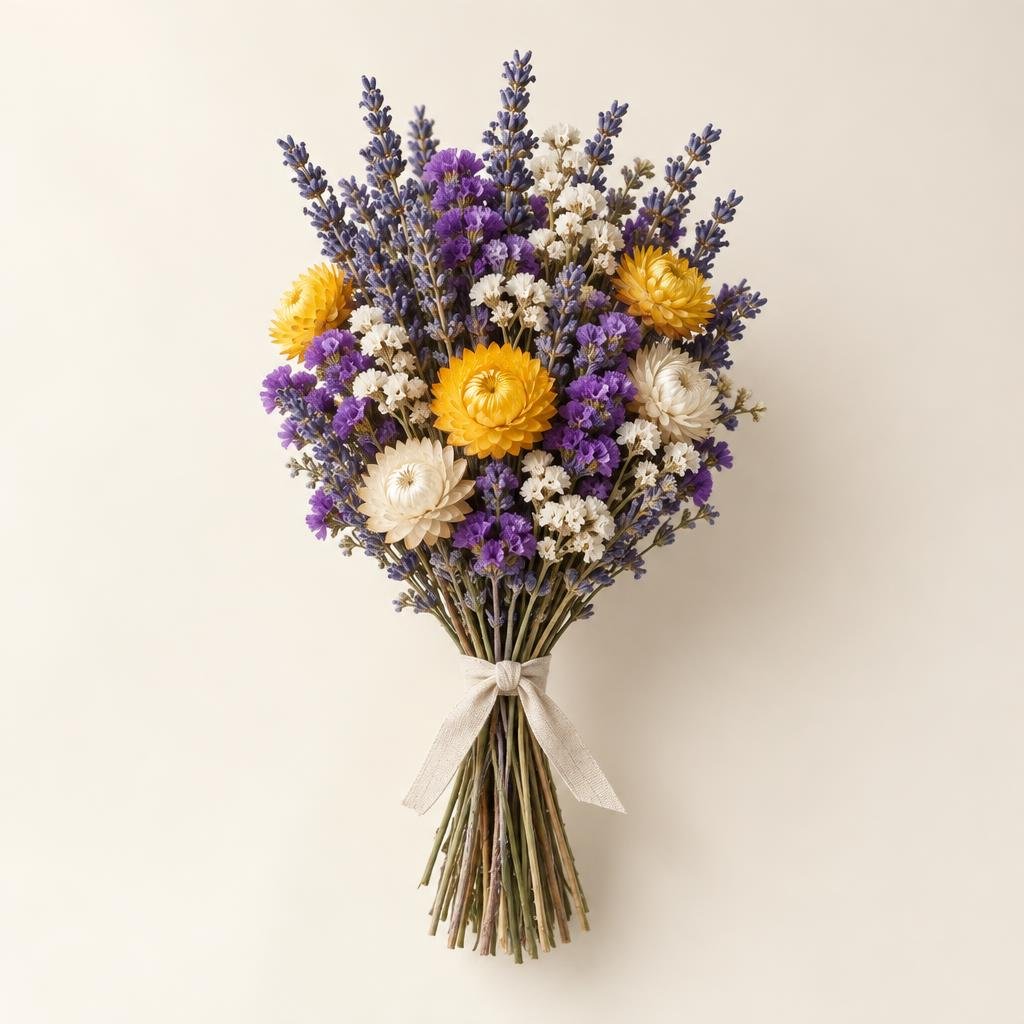
Group by height and texture. Fluffy pampas or bunny tail grass looks best in a tall vessel where it can spread, while a small posy of lavender and strawflowers suits a shelf or a bedside table. Matching the scale of the arrangement to the space it sits in is the quickest way to make it feel settled rather than squeezed in.
Choosing Vessels and Contrast
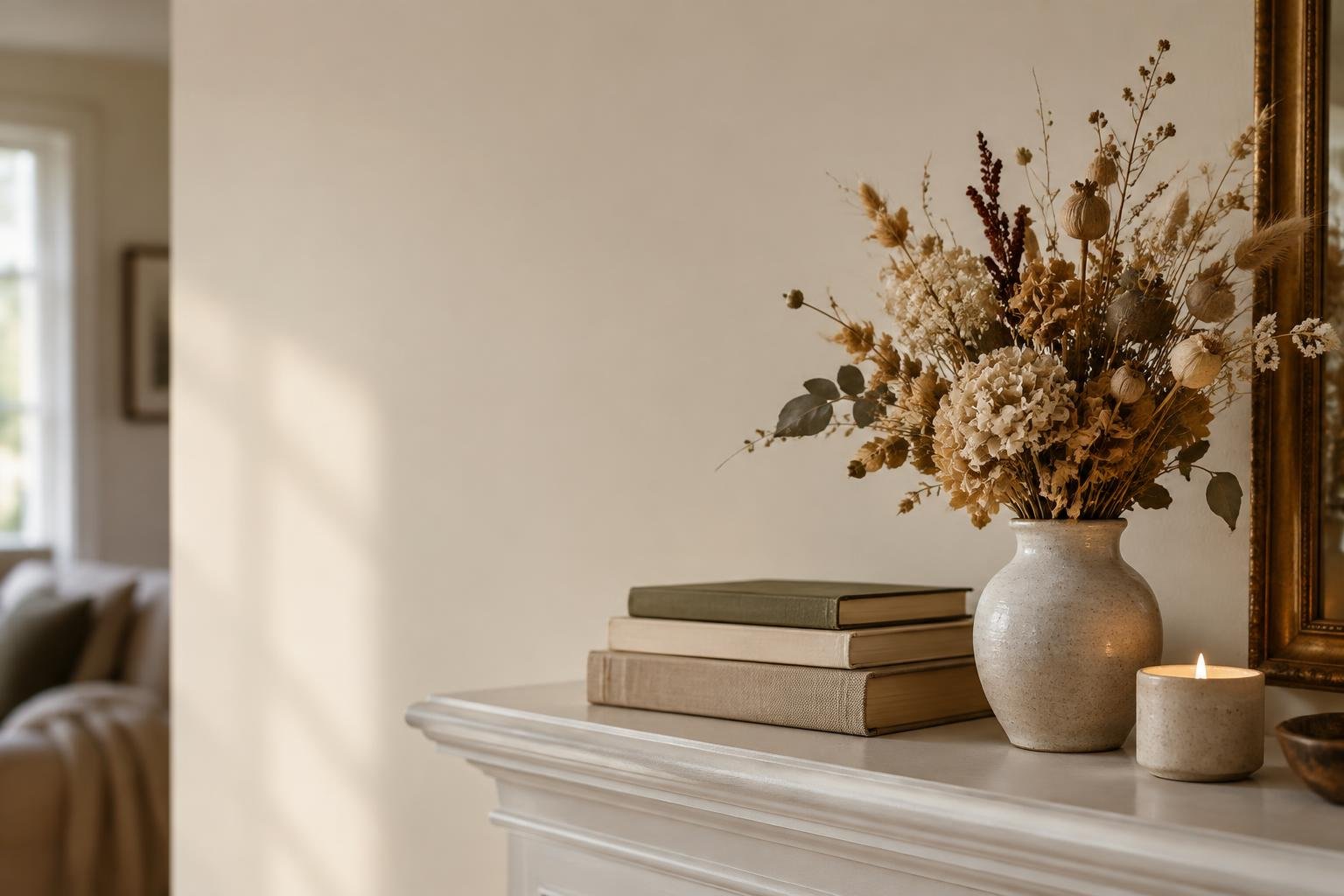
Mixing a soft grass with something more structured gives pleasing contrast. Think of a feathery plume beside a firm, round seed head, or a papery bloom next to a spiky stem. Each shape makes the other more noticeable. If everything is fluffy, the arrangement can look blurry, and if everything is stiff, it can look severe. A balance of both usually reads best.
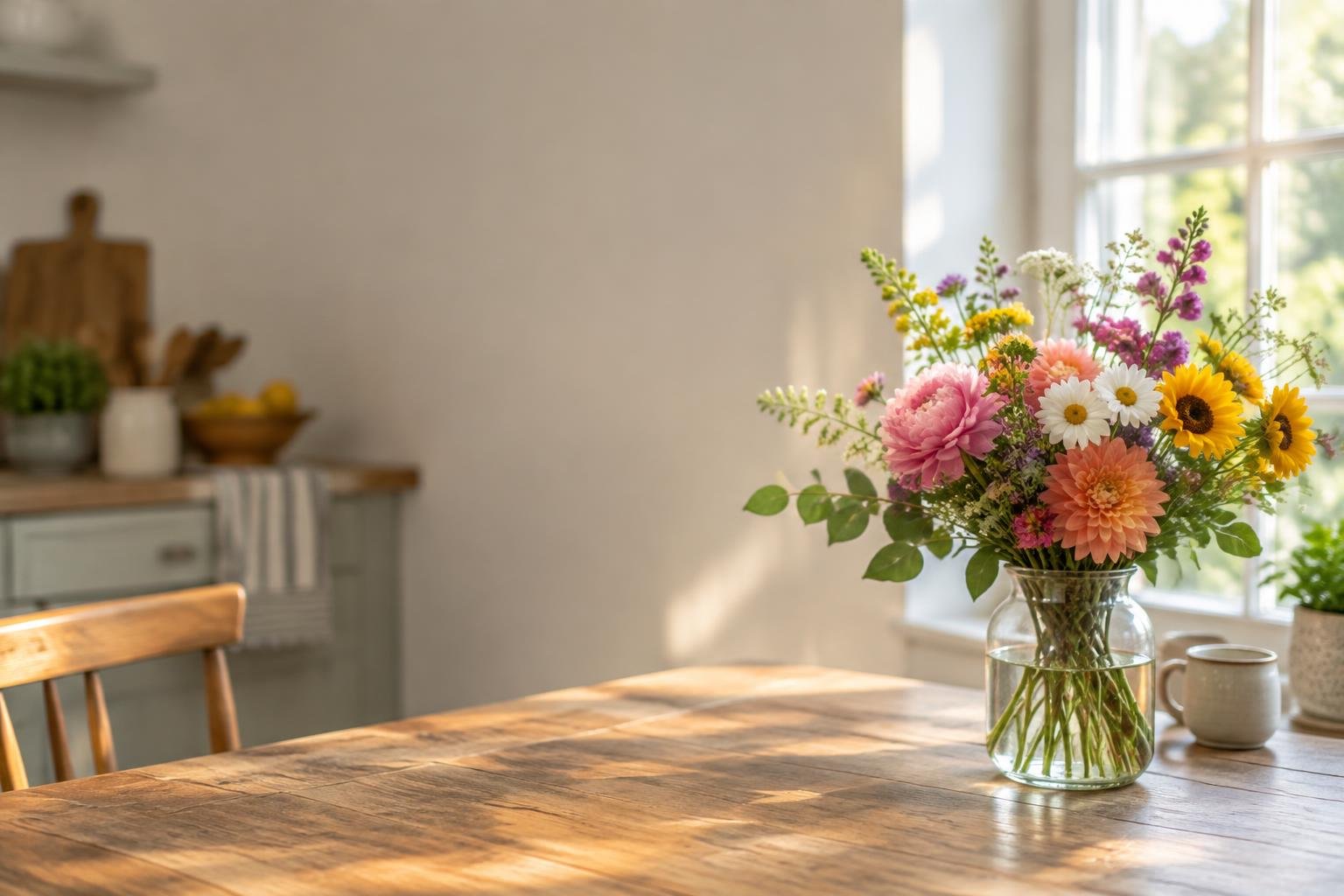
The container matters as much as the stems. A tall, heavy vessel steadies big grasses that might otherwise tip. A narrow neck holds a few stems upright without needing anything extra inside. Clear glass shows the stem ends, which can look tidy or untidy depending on how they were cut, while ceramic and stoneware hide them and add a quiet color of their own.
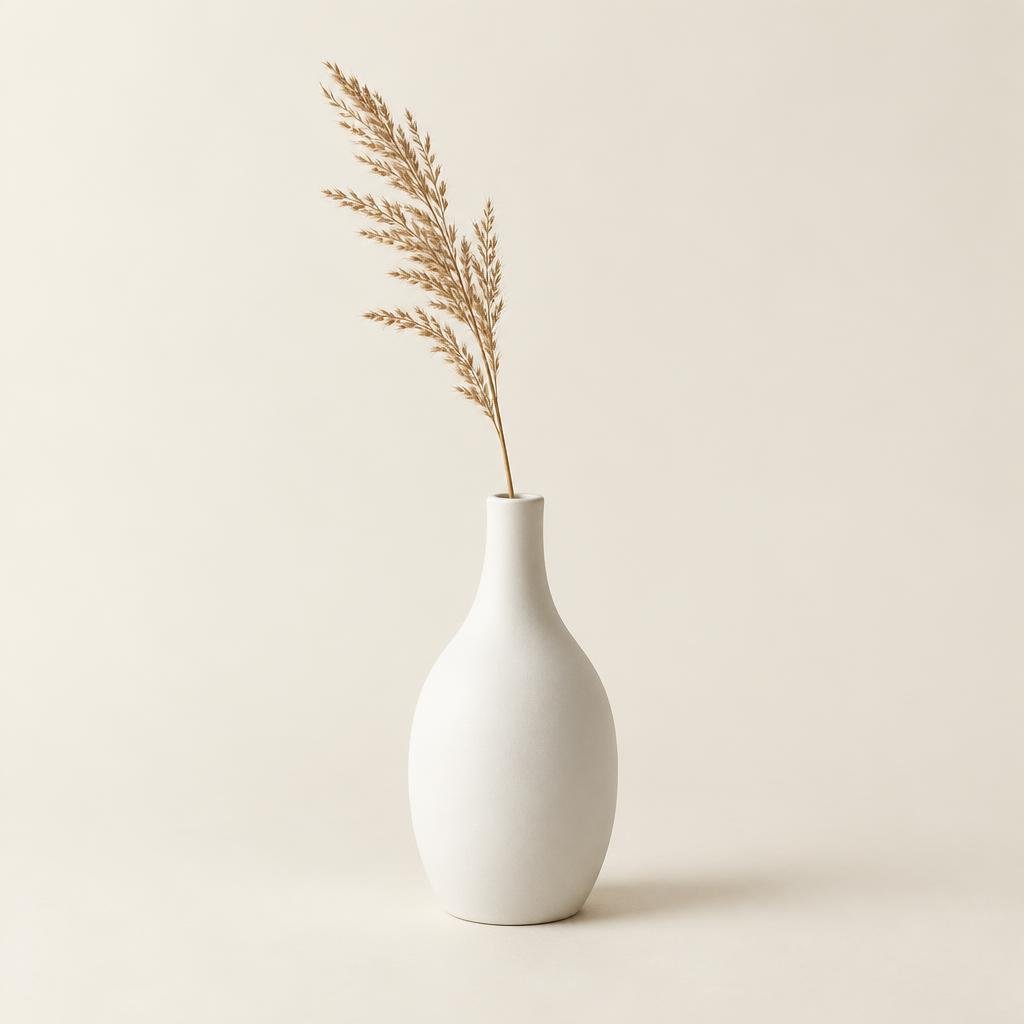
A single stem in a narrow bud vase is one of the simplest ways to style. It needs no water and takes almost no space, so it can sit on a windowsill, a desk or beside a stack of books. The vase does half the work. Choose one with a shape you like, because it will be seen as much as the flower.
Single stems also suit people who worry that dried flowers will feel fussy. One long stem of grass or one large bloom has a calm, graphic look. You can set several bud vases in a row, each holding something different, or scatter them around the house. Odd numbers tend to look more natural than even ones, though trust your own eye.
Color, Damp and Care
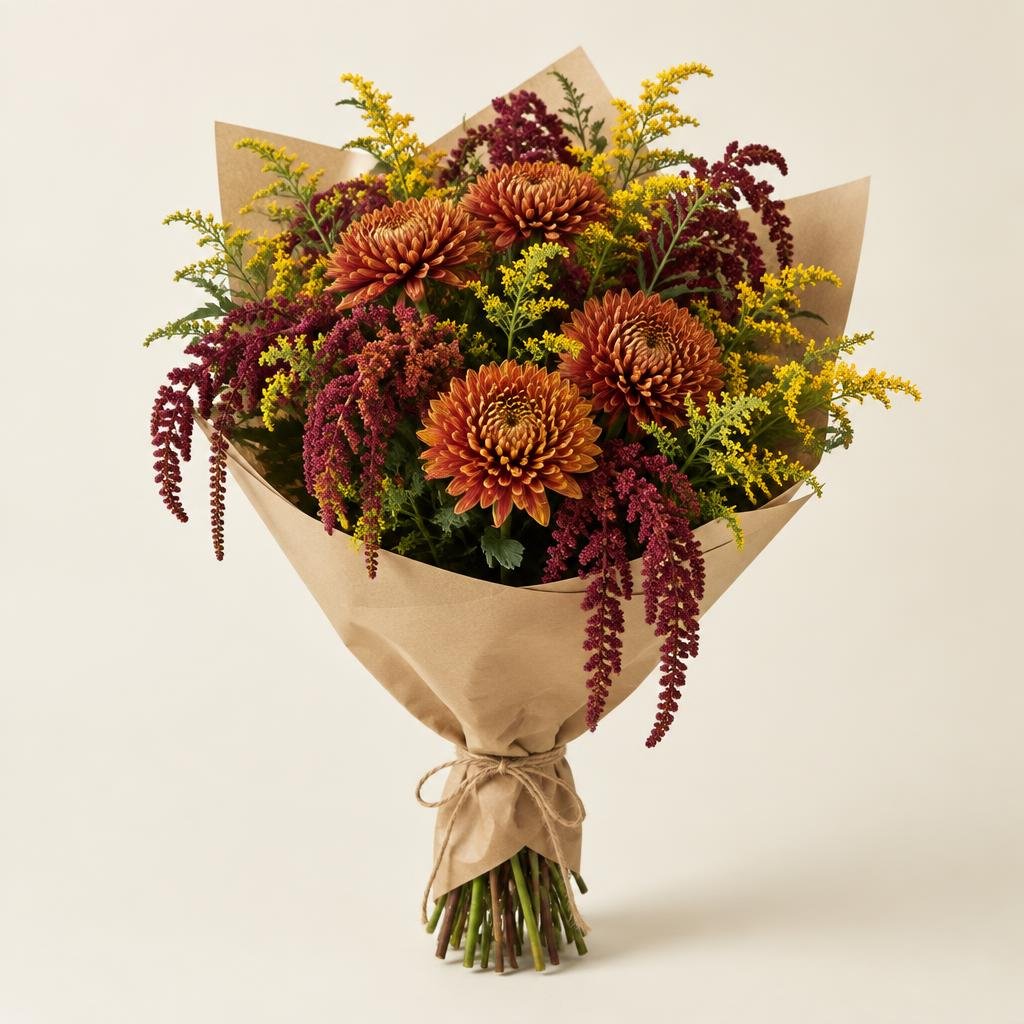
Color is worth planning. Dried flowers tend toward warm, muted shades, so they sit happily with neutral walls, wood and linen. Think of cream, tan, dusty rose and soft sage. These tones belong together because drying pulls the brightness out of each of them and leaves a similar gentle, sun-washed quality across the whole bunch.
If your room is bright and busy, choose a calmer arrangement so it does not compete. A pattern-heavy sofa or a gallery wall already gives the eye plenty to do. In that setting, a single tone of grass or one type of flower in a plain vessel will feel restful, while a mixed bunch might simply add to the noise.
Keep dried flowers away from damp. Bathrooms and kitchens with steam can make them limp or musty. Dried material takes up moisture from the air and slowly loses its crispness, and the shape of the arrangement sags with it. A dry room with some air movement is best, so pick a spot where the air is not stale or heavy.
A gentle dusting with a soft brush keeps them clean. A dry paintbrush or a makeup brush works well, stroking lightly from the top down. Avoid wiping with a cloth, which can catch on delicate parts and snap them. Work slowly, and do it over a tray or a sheet of paper so that any fallen petals are easy to gather up.
Handling and Refreshing Arrangements
Handle them as little as possible. Dried stems are brittle, and every move sheds a few petals or seeds. Place them once, somewhere they will not be knocked, and leave them be. A low table beside a busy doorway is a poor choice, while a high shelf or a quiet corner will let the arrangement stay whole for much longer.
Placement also helps if you must adjust things. If a stem sits wrong, lift it by the base rather than the head, and ease it into place rather than pulling. Be especially careful with seed pods and fine grasses, which release their parts easily. Small shifts are better than rearranging the whole bunch, which invites breakage and leaves a mess on the floor.
When you tire of an arrangement, take it apart. Stems can be rebound with twine or ribbon, mixed into a new bunch, or tied into a posy to give away. Sorting them by length first makes it easier to see what you have. Set aside any that are broken or shedding, and keep the best stems for the next round.
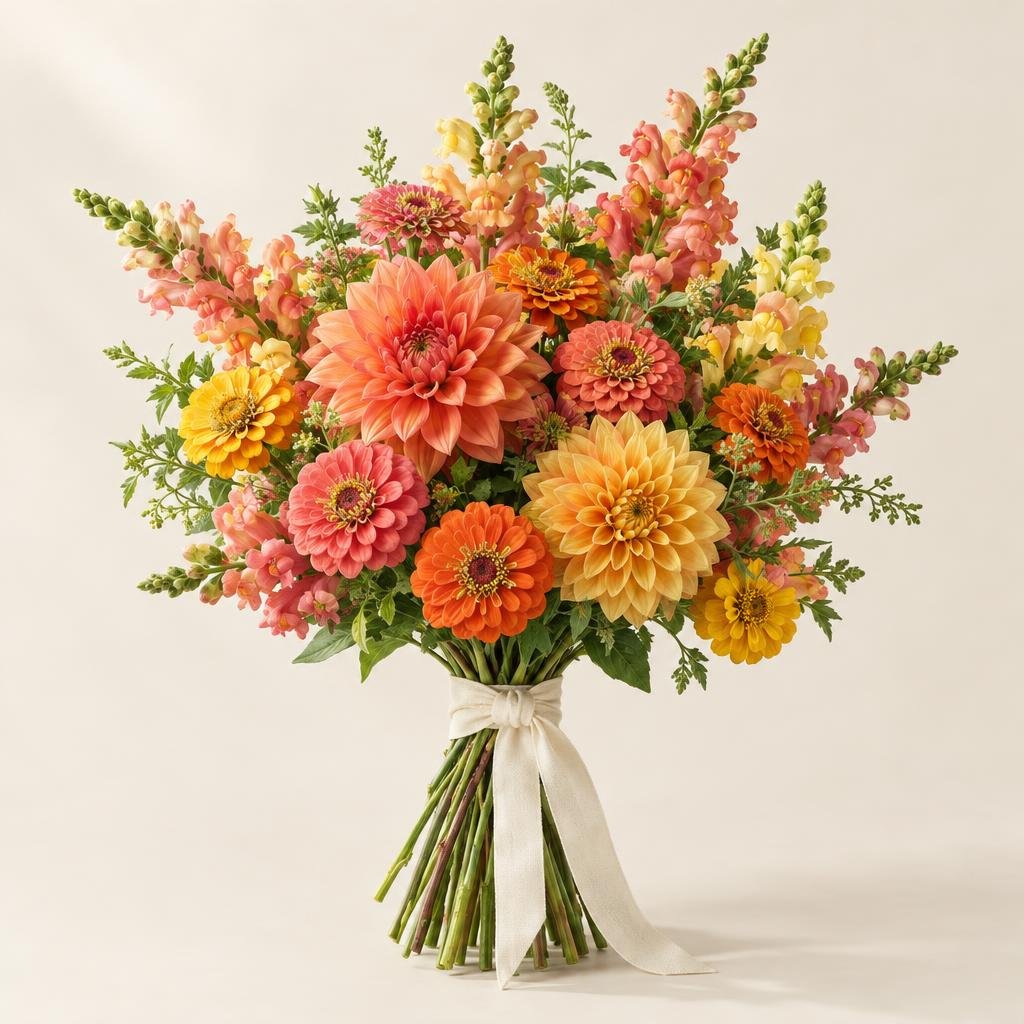
A length of linen or satin ribbon makes an old arrangement look new. Linen gives a relaxed, textured finish, while satin feels a bit more formal and catches the light. Tie it snugly just below the heads and trim the ends at an angle. The same stems can feel quite different with only a change of ribbon and vase.